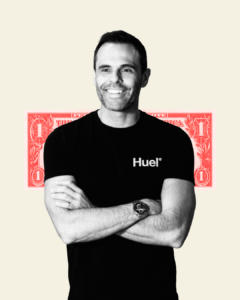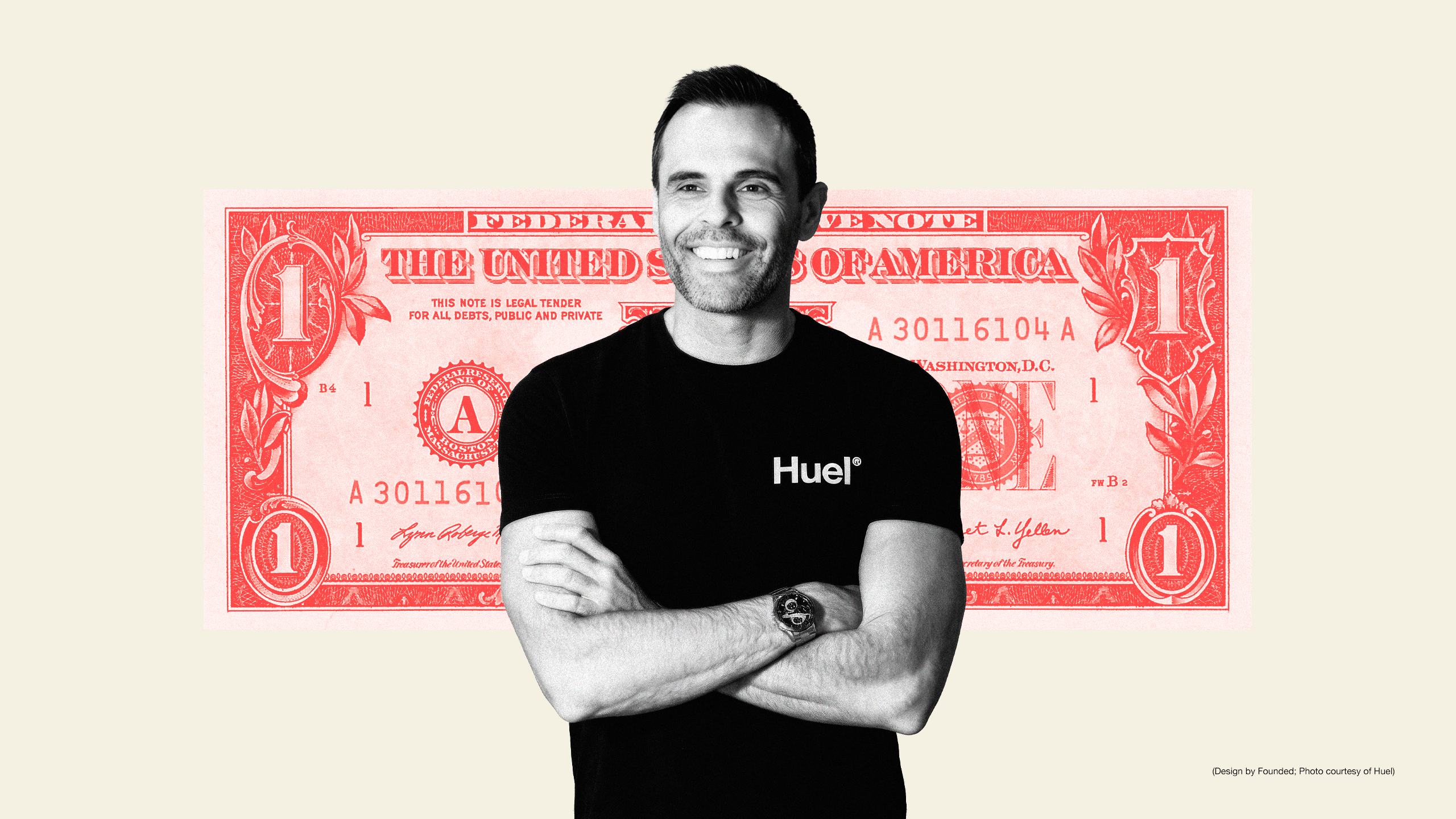
Julian Hearn left school at 16 and worked road jobs before building Huel. Now he is set to make $500 million after Danone bought the brand in a $1.2 billion deal.
What does it take to go from doing road work for a living to building a brand big enough for a global food giant to buy? In Julian Hearn’s case, the answer took him nearly a lifetime of experimentation to find.
For years, Hearn was trying to find a way out of the manually demanding lifestyle he had once fallen into. Today, he is set to make £400 million (approximately $535 million) after selling his nutrition brand Huel to French food group Danone in a deal reported at around $1.2 billion.
Hearn, now 55, was born in 1972 in Buckinghamshire, England. At 16, he left school with “virtually no qualifications,” worked in a shop for a year, then spent two years as a laborer “digging holes in the road.”
The turning point, according to his own biography, came from someone close. His girlfriend told him he was too bright to be doing the work he was doing, and that he should go back to school. So, he packed up his bags and went back to college, did well, got into university, and graduated with a 2:1.
A move in the right direction
That path led to a career in marketing and business. By 2011, he had sold an earlier company, Promotional Codes, and took time out of the day-to-day grind while he had a young child. After 18 months, however, he was itching to start again.
Hearn’s restlessness paved the way to the next big thing, as it forced him to face a problem that he kept running into in his own life head-on. When you’re living such a busy, on-the-go lifestyle, he realized that it can be nearly impossible to eat well if you don’t have the time, energy, and consistency to do it.
Like most people who find themselves interested in the intertwining threads of fitness and nutrition, Hearn found that motivation itself wasn’t even the hardest part. It was the logistics of meal planning, shopping, cooking, and cleaning, just to go and do it all again the next day.
Building Huel as the dependable default
Naturally, he started looking for something that didn’t rely on willpower. Something you could have when work was hectic, when travel disrupted routines, and when the natural rhythms of life didn’t leave space for perfectly balanced meals. The idea wasn’t to replace food as a pleasure, but it was to create a dependable default you could fall back on.
That brainstorm eventually became Huel, the British nutrition brand he co-founded in 2014 that Danone just snapped up for over $1 billion. At the time, the brand’s early promise to provide complete nutrition in a drinkable form was unusual enough to attract scepticism, but practical enough to attract the time-poor, routine-driven people who felt the problem most.
Hearn’s early intuition told him he couldn’t build it alone. When the idea started to take shape, he partnered with James Collier, a nutritionist who helped turn that early ambition into a product that actually worked. The division of labor and expertise was crucial.
While Hearn brought the brand and the commercial engine, Collier brought the nutritional grounding – eventually helping define what “complete” nutrition could look like in the first place.
Huel’s early days
In the beginning, Huel was small and obsessive in the way early companies often are. The product had to be good enough that customers didn’t try it once and move on. The messaging had to be clear enough that people understood what it was. And the brand had to feel trustworthy in a category
where trust is easy to lose.
Hearn’s marketing instincts quickly paid off, attracting early backing from long-term supporter, entrepreneur and investor Steven Bartlett, alongside names like Idris Elba and Jonathan Ross.
Today, Huel has expanded beyond it’s initial format and into a broader set of products, following the same core idea: reduce friction, increase reliability.
The moment Danone put a number on it
As a result, Hearn had to keep the proposition simple while the business became more complex. The acquisition by Danone was, in a sense, the predictable endpoint of a brand that had outgrown its startup phase.
Big food companies buy what’s already working because they’re buying into an already established base of distribution, loyal customers, and a product thesis that fits where consumer tastes are going.
The latest milestone also put a clean number on a story that had unfolded in public. Much of the attention has now landed on the deal value and what it means for Hearn personally, highlighting the idea that someone who once dug holes in roads for a living could end up with generational wealth.
Steven Bartlett is an investor in both Founded and Huel