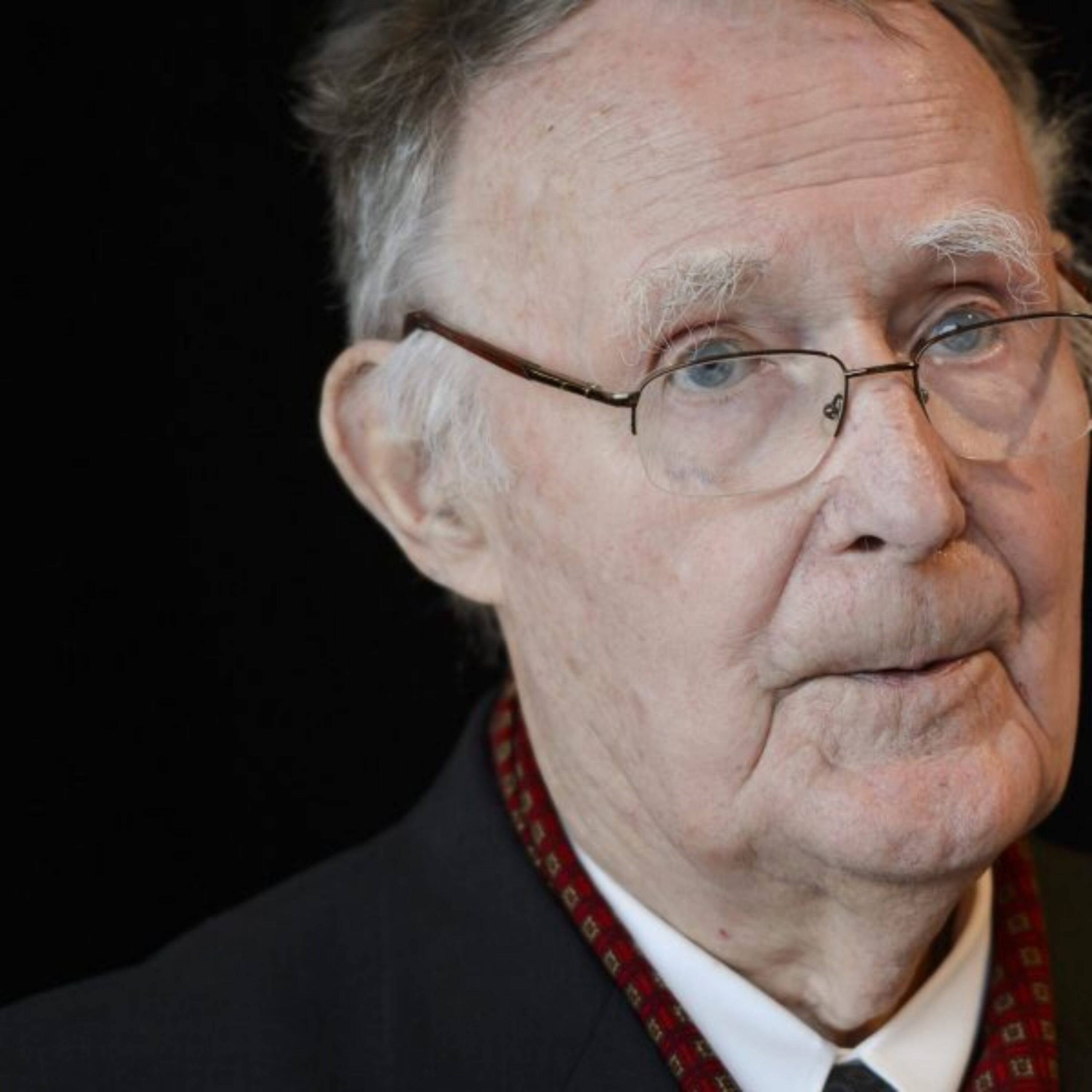
IKEA founder Ingvar Kamprad built a $58.7 billion fortune – then flew economy, bought clothes at flea markets, and traveled to Vietnam to avoid a €22 haircut.
Ingvar Kamprad built IKEA into the world’s largest furniture company and amassed an estimated $58.7 billion fortune. He also flew economy, drove an old Volvo, and got his haircuts in Vietnam.
The IKEA founder, who worked at the company until he was 87 and died in 2018 at age 91, became almost as famous for what he refused to spend as for what he built. Nicknamed “Uncle Scrooge” and “The Miser” in the Swedish press, Kamprad spent decades cultivating a personal frugality so extreme that it became indistinguishable from the company’s operating philosophy.
The pitch was simple: if the founder wouldn’t waste a krona, no one at IKEA would either.
“How the hell can I ask people who work for me to travel cheaply if I travel in luxury?” Kamprad once said. “It’s a question of good leadership.”
The flea-market wardrobe and the Vietnam haircut
Kamprad founded IKEA in 1943 at 17 years old, at his uncle Ernst’s kitchen table in Småland, the rural southern region of Sweden he would spend the rest of his life invoking as the source of his thrift. Småland, he liked to say, was the explanation for everything.
“It’s in the nature of a Smaland to be thrifty,” he told Sweden’s TV4 in a 2016 documentary. In the same interview, he gestured at his outfit and added: “I don’t think I’m wearing anything that wasn’t bought at a flea market. I want to set a good example.”
He meant it literally. According to Fortune, Kamprad reportedly sneaked home packets of salt and pepper from restaurants, recycled tea bags, ate at his own IKEA cafeterias, and flew economy class. He drove an old Volvo. He also, by his own admission, picked his haircut destinations based on price – telling Swedish newspaper Sydsvenskan that a €22 cut in the Netherlands was above budget and that he preferred to wait until he was traveling somewhere cheaper.
“Last time it was in Vietnam,” he said.
The frugality was codified inside the company. IKEA’s employee guidelines, Fortune reports, state that “wasting resources is a mortal sin at IKEA.” Kamprad’s own internal manifesto, the “Testament of a Furniture Dealer,” made the same point in plainer language: “We don’t need flashy cars, impressive titles, uniforms or other status symbols. We rely on our strength and our will!”
A complicated legend
The image was carefully maintained – and not entirely complete. Reporters over the years found that Kamprad also owned a villa in Switzerland, a country estate in Sweden, and a vineyard in Provence, and that the man in the old Volvo also drove a Porsche. He spent nearly four decades living in Switzerland as a tax exile before returning to Sweden in 2014, and he faced sustained criticism for IKEA’s complex foundation-based ownership structure and its tax arrangements.
He also carried a darker piece of personal history. Swedish security police noted his activities with a far-right nationalist group as early as 1943, the same year he founded IKEA. When the links surfaced publicly in 1994, Kamprad apologized, calling that period “a part of my life which I bitterly regret” and “the most stupid mistake of my life.”
Today, IKEA operates 504 stores across 63 countries. Last year the company generated around $50 billion in sales and welcomed 915 million visitors – numbers that have, if anything, made the founder’s flea-market wardrobe look more deliberate, not less.
Kamprad is hardly the only billionaire to wear frugality as a uniform. Warren Buffett, worth roughly $144 billion, still lives in the Omaha house he bought for $31,500 in 1958, drives a car more than 20 years old, and famously spends no more than $3.17 on breakfast. Mitzi Perdue, heiress to the Sheraton Hotels and Perdue Farms fortunes, doesn’t own a car and gets around by subway.
“I’m not interested in cars, and my goal is not to make people envious,” Buffett has said. “Don’t confuse the cost of living with the standard of living.”
For founders, Kamprad’s story lands somewhere uncomfortable between role model and cautionary tale. He turned personal thrift into a competitive advantage, a hiring filter, and a brand promise – and he also turned it into a kind of performance that didn’t always match the private life behind it. The takeaway isn’t that great founders shop at flea markets. It’s that the habits a founder is seen practicing tend to become the habits a company is built on, whether they’re meant to or not.
Image / Getty Images