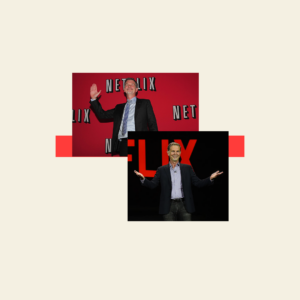
After selling his first company, Pure Software, Reed Hastings realized its culture was a missed opportunity – a lesson that later shaped how he built Netflix.
The story Reed Hastings tells about his “biggest mistake” doesn’t begin with Netflix. It begins in the far more ordinary setting of a fast-growing software company where the work kept expanding, and the guardrails kept multiplying.
In October 1991, Hastings co-founded Pure Software, built around a debugging tool for engineers. The company grew quickly, layered on more products, and by August 1995, it went public with Morgan Stanley involved in the offering.
A few years later, Pure’s trajectory culminated in an acquisition. Accounts of the deal’s value vary depending on timing and market swings, with contemporaneous reporting showing the offer moving sharply and later retellings often citing about $750 million.
Hastings looked back on that chapter with a tone that surprised people who expected pure triumph. In a reflection during an interview with Invest Like The Best, he described a company that, in his view, didn’t reach what it could have reached.
But instead of putting the blame on a single strategy memo or product bet, he pointed at something that felt more physical than theoretical: a gradual decline in “talent density.”
The early mistakes that later shaped the Netflix company culture
In his telling, the sequence was painfully consistent. As the average bar slipped, the organization tried to protect itself from mistakes by adding rules, processes, and safeguards meant to reduce error.
Hastings later described it as an attempt to run software like a manufacturing plant, using process as the answer, only to discover it didn’t produce the productivity or the talent he wanted.
What made the lesson durable was how it showed up in behavior. Outside of the handbook, the rules spread into calendars, meetings, approval chains, and the way decisions started needing permission.
And the people most capable of working without guardrails felt the friction first. In Hastings’ framing, the added structure pushed high-caliber people away rather than pulling performance back up.
When Hastings later co-founded Netflix with Marc Randolph in 1997, he carried that scar tissue into the next build. The culture Netflix became known for was presented as a system designed to avoid the specific failure mode he believed he had already lived through.
Netflix’s own culture materials have repeated the same emphasis for years: the quality of colleagues, the expectation of high performance, and the idea of operating like a professional sports team, not a family.
The company’s language also foregrounded “Dream Team” aspirations in its updated Netflix company culture memo, reinforcing that the intent has always been to keep standards high enough that heavy, unnecessary process did not become the default management tool.
In hindsight, the “mistake” Hastings described was not a dramatic collapse. It was the slow normalization of a lower bar, followed by the slow construction of rules meant to compensate. And he made sure that the culture his global streaming giant would advertise to the world would forever try to prevent that sequence from taking hold again.